
 Image 1 of 3
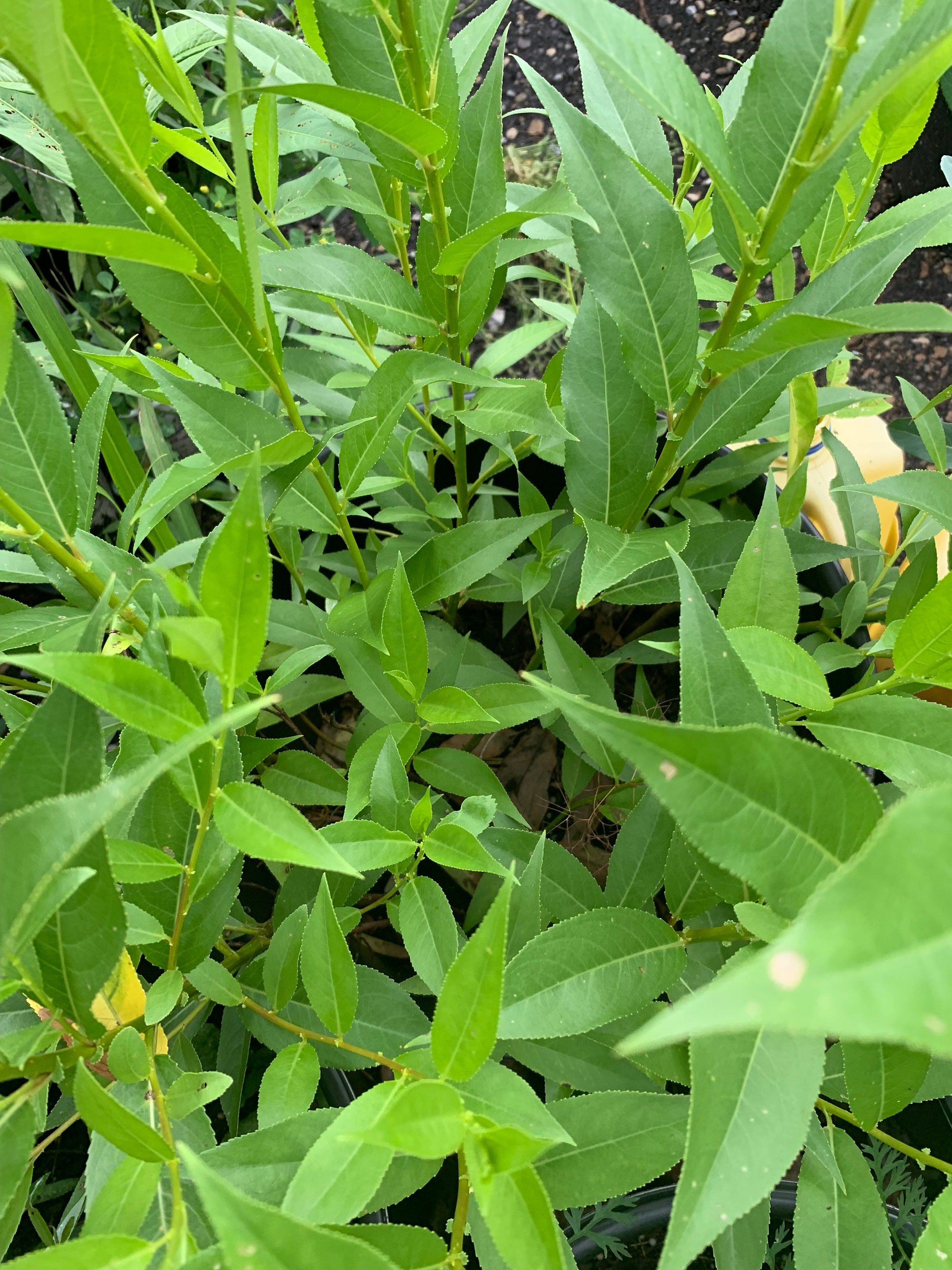 Image 2 of 3
 Image 3 of 3
Salix lucida - Swamp Shining Willow
- deciduous fast-growing small tree or tall shrub that can grow in wet places
- green (female) or yellow (male) colored catkins in early spring come with the leaves
- commonly grows with multiple stems from the base, especially at the higher elevations of its range
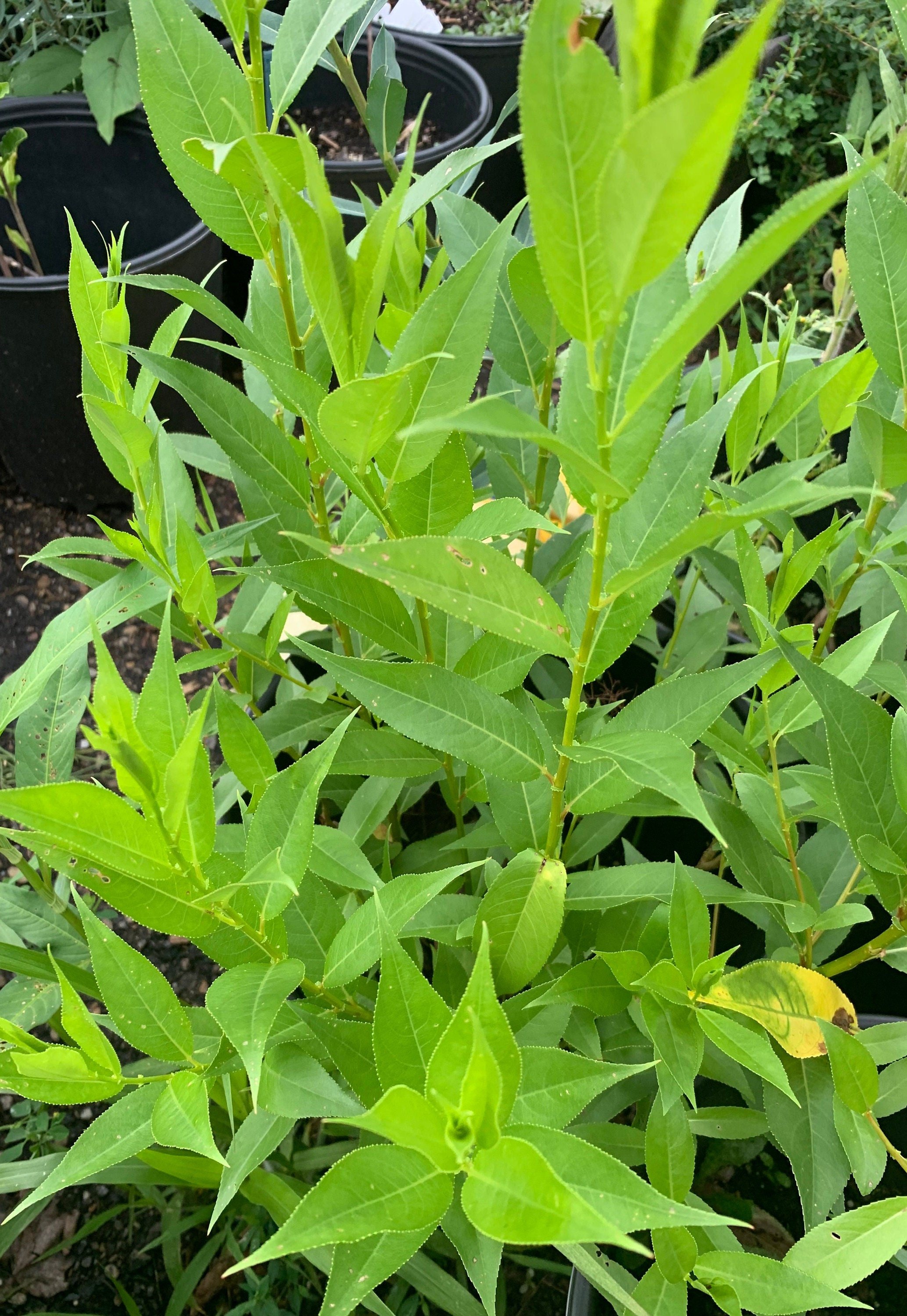
- alternate lanceolate leaves are 2 to 5 inches long, smooth and shiny with a paler underside
- seed coat is covered by soft cottony hairs; prolifically produced seeds disperse by wind and water in early summer, and are viable for about 8 weeks
- this is a dioecious species, having separate male & female plants; the gender of this specimen is unknown
- fall color is an insignificant yellow
- Young branches are yellowish-green to orange- or red-brown; stems are brittle
- good for sunny to part shade areas with consistently moist or wet soils; this species can grow in swamps, and even succeed in standing water (seasonal flooding), preferring edge habitats
- highly desirable as a wildlife forage, though less desirable to cattle and horses
- a great early food source for pollinators
- larval host plant for the Mourning Cloak, Acadian Hairstreak, and Admiral butterflies
- this species is native to North America
- Willows are generally very easy to root from hardwood cuttings or long rods poked deep into the soil
- a tea made from willow stems can be used as a natural rooting hormone for plant propagation
- typically reaches 12 to 30 feet high by 10-25 feet wide
- grows in zones 2-9
- ships bareroot, wrapped in a soil-less medium to keep the roots damp
- ships in cool spring, fall, or winter seasons; not during summer
Salix lucida - Swamp Shining Willow
- deciduous fast-growing small tree or tall shrub that can grow in wet places
- green (female) or yellow (male) colored catkins in early spring come with the leaves
- commonly grows with multiple stems from the base, especially at the higher elevations of its range
- alternate lanceolate leaves are 2 to 5 inches long, smooth and shiny with a paler underside
- seed coat is covered by soft cottony hairs; prolifically produced seeds disperse by wind and water in early summer, and are viable for about 8 weeks
- this is a dioecious species, having separate male & female plants; the gender of this specimen is unknown
- fall color is an insignificant yellow
- Young branches are yellowish-green to orange- or red-brown; stems are brittle
- good for sunny to part shade areas with consistently moist or wet soils; this species can grow in swamps, and even succeed in standing water (seasonal flooding), preferring edge habitats
- highly desirable as a wildlife forage, though less desirable to cattle and horses
- a great early food source for pollinators
- larval host plant for the Mourning Cloak, Acadian Hairstreak, and Admiral butterflies
- this species is native to North America
- Willows are generally very easy to root from hardwood cuttings or long rods poked deep into the soil
- a tea made from willow stems can be used as a natural rooting hormone for plant propagation
- typically reaches 12 to 30 feet high by 10-25 feet wide
- grows in zones 2-9
- ships bareroot, wrapped in a soil-less medium to keep the roots damp
- ships in cool spring, fall, or winter seasons; not during summer