Lonicera caerulea 'Honey Bee' - Midseason Honeyberry - also known as Haskap
- hardy deciduous multi-stemmed edible fruiting shrub - inconspicuous fragrant yellow blooms in spring - blooms in midseason for honeyberries, and requires a like-blooming pollinator* - overlapping bloom times mean early, early-mid, and midseason cultivars are all likely pollinating candidates - fruit tastes similar to blueberries, but ripens earlier by about a month - this cultivar has a lightly tart taste - honeyberries are one of the first berries to ripen in spring! - berry is an elongated edible blue cylinder, good for fresh eating, baking, or preserves - fruit has a tender texture, but freezes well - this cultivar was selected by the University of Saskatchewan for its mildew resistance and pollinator suitability in combination with Borealis, Tundra, and the Indigo series - this cultivar has large berries, and is a prolific producer! - this cultivar tends to hold on to its fruit and is not suitable for mechanical harvesting, but may be suitable for bush-dried fruit and positioning as a guard row against birds to protect other bushes from berry loss - green leaves in pairs do not develop significant fall color - attractive rounded form makes a good landscape shrub; suitable as an edible hedge - this shrub is not prone to send up suckers - this cultivar has an upright growth habit, taller than its like-blooming peers - great in full sun to part shade - needs well-drained soil - grows 5-6 ft tall by 5 ft wide - grows in zones 2-7; requires more chilling hours than zones 8 and up tend to provide, to grow well
- ships bareroot, wrapped in a soil-less medium to keep the roots damp - ships in cool spring, fall, or winter seasons; not during summer
* for an up-to-date blooming calendar to identify like-blooming cultivars, I recommend http://www.honeyberryusa.com/honeyberrybloomtimes.html
Lonicera caerulea 'Honey Bee' - Midseason Honeyberry - also known as Haskap
- hardy deciduous multi-stemmed edible fruiting shrub - inconspicuous fragrant yellow blooms in spring - blooms in midseason for honeyberries, and requires a like-blooming pollinator* - overlapping bloom times mean early, early-mid, and midseason cultivars are all likely pollinating candidates - fruit tastes similar to blueberries, but ripens earlier by about a month - this cultivar has a lightly tart taste - honeyberries are one of the first berries to ripen in spring! - berry is an elongated edible blue cylinder, good for fresh eating, baking, or preserves - fruit has a tender texture, but freezes well - this cultivar was selected by the University of Saskatchewan for its mildew resistance and pollinator suitability in combination with Borealis, Tundra, and the Indigo series - this cultivar has large berries, and is a prolific producer! - this cultivar tends to hold on to its fruit and is not suitable for mechanical harvesting, but may be suitable for bush-dried fruit and positioning as a guard row against birds to protect other bushes from berry loss - green leaves in pairs do not develop significant fall color - attractive rounded form makes a good landscape shrub; suitable as an edible hedge - this shrub is not prone to send up suckers - this cultivar has an upright growth habit, taller than its like-blooming peers - great in full sun to part shade - needs well-drained soil - grows 5-6 ft tall by 5 ft wide - grows in zones 2-7; requires more chilling hours than zones 8 and up tend to provide, to grow well
- ships bareroot, wrapped in a soil-less medium to keep the roots damp - ships in cool spring, fall, or winter seasons; not during summer
* for an up-to-date blooming calendar to identify like-blooming cultivars, I recommend http://www.honeyberryusa.com/honeyberrybloomtimes.html

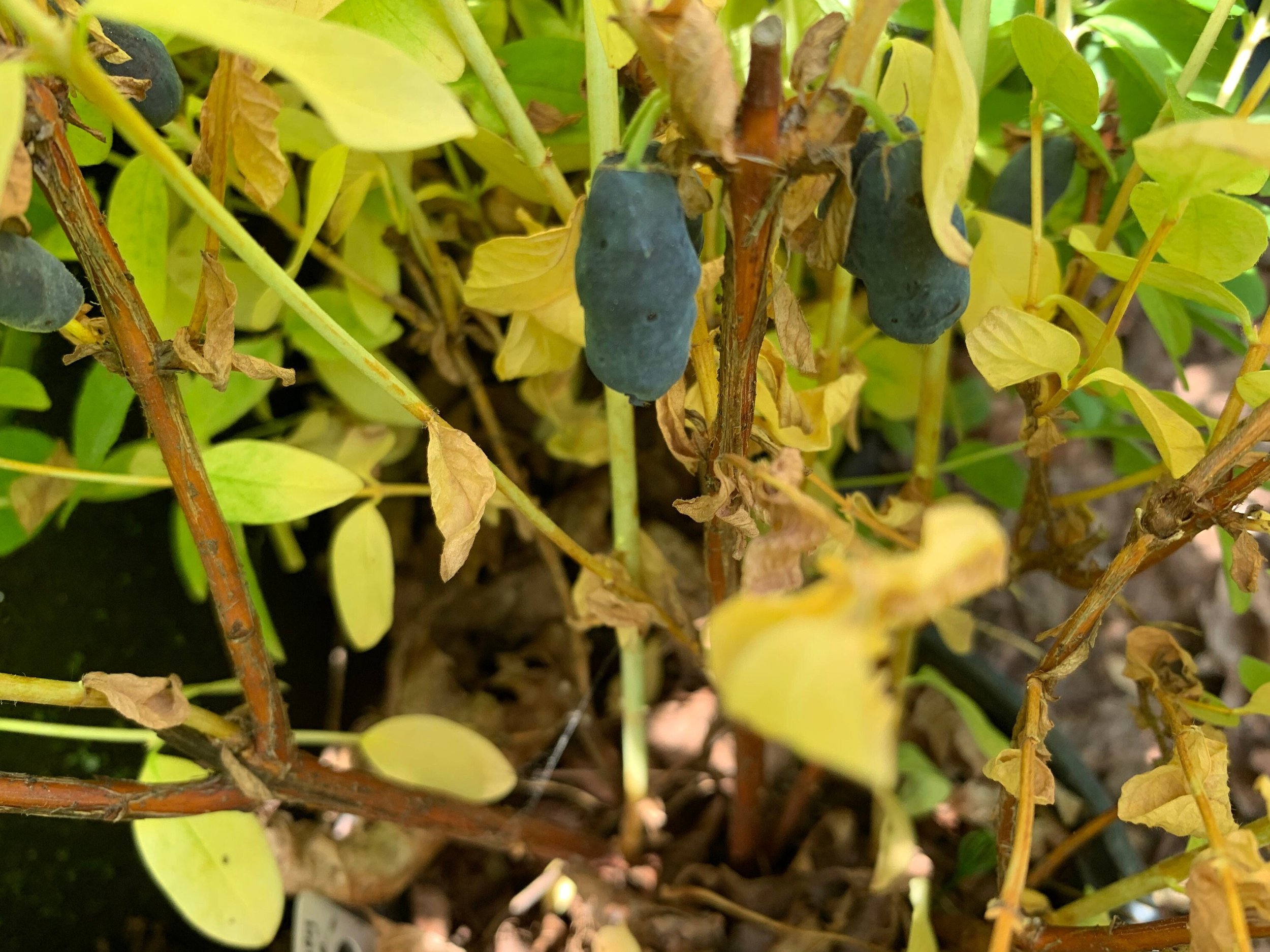 Image 1 of 2
 Image 2 of 2